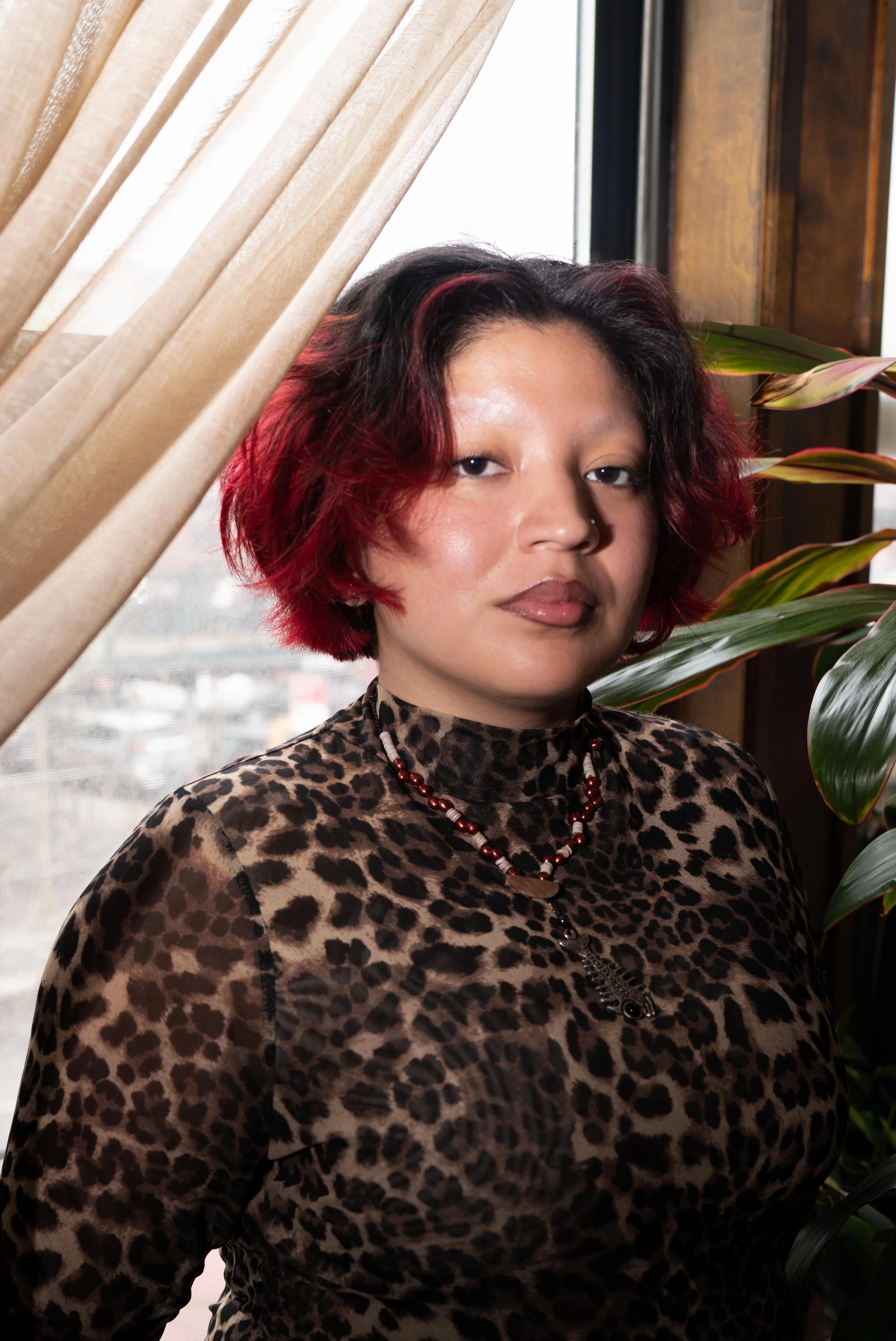
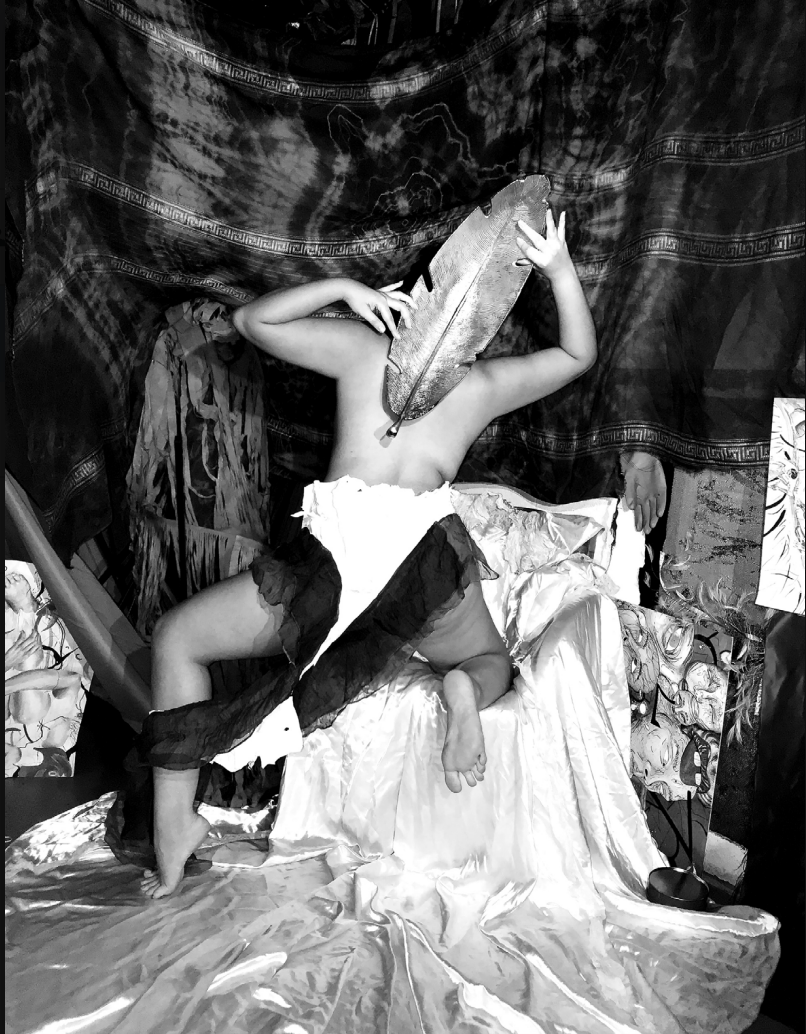
Orquídya Tichacoco
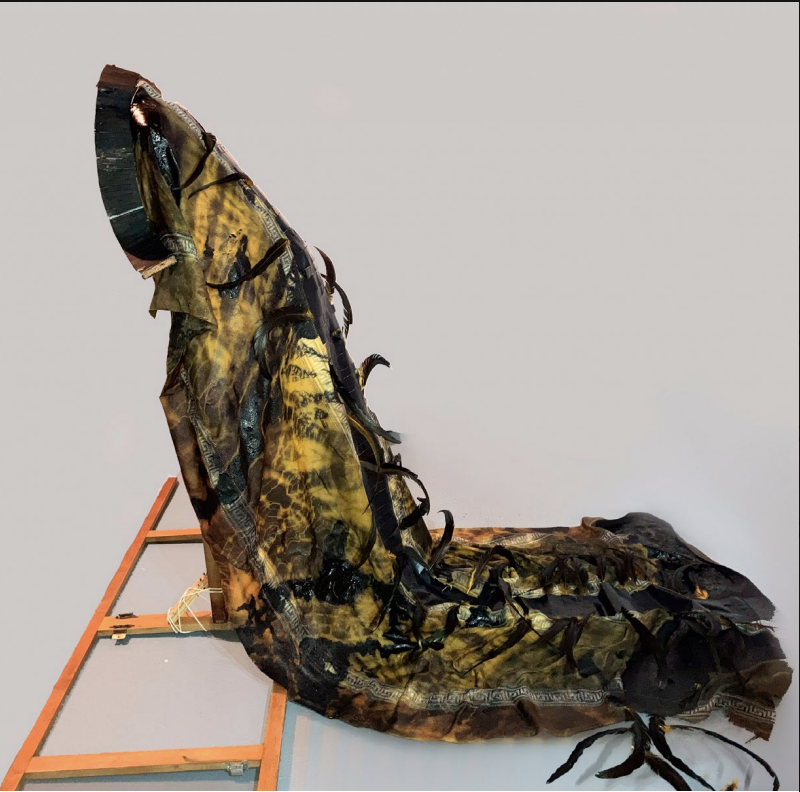
Difunto, woven textile, acrylic, feathers, wooden cabinet frame, rope, sculpture, poem, sound. Length: 00:04:06
Biography
Orquídya Tichacoco is a sculptress of Managuara, so-called “El Salvador.” Tichacoco’s work investigates and responds to generational inheritance, folklore, settler-state formations, indigenous erasure, and cultural memory. Their practice uses found objects, organic materials, archival records, performance, and sound. Through techniques such as weaving, welding, and assemblage, the landscape, material culture, and stories of Eastern El Salvador are evoked. Tichacoco earned their BFA in Interdisciplinary Sculpture at Maryland Institute College of Art in 2021. Their most recent exhibits include Impulse and Momentum at Area 405 in Baltimore, MD; Counterspaces: Healing in Resistance at UNICA in UCLA; and Mujeres Fuertes at Lenrow Gallery in Goucher College. In 2021, they curated heirs of at Middendorf Gallery in Baltimore, MD, and participated as an Artist-in-Residence at the Curatorial Program Research in 2023 (NYC) and at Fernland Studios in 2024 (Oregon & NYC). Tichacoco’s writing will be featured in Fingir’s first edition, No olvides las manos que nos dieron de comer, in Spring 2027.
Statement
In the 1880s, communal lands were abolished in El Salvador to further consolidate land ownership among a small oligarchy and further dispossess indigenous and campesino communities. Vagrancy laws forced the newly landless to work on plantations belonging to the oligarchy. They received little to no pay and worked in dire conditions. Circumstances that later on directly informed the revolution, or civil war. In 2002, the National Civilian Police of El Salvador released a racist statement blaming national violence on the afro and indigenous ancestry of Salvadorans. Anti-gang policies and penal reforms were then implemented fueling the state-orchestrated expansion of carceral infrastructure through racial profiling. Today, injustice engulfs every life, land continues to be stolen, and the true nature of the settler-state’s violence is misrepresented via media propaganda, misinformation, and written history. The State Of Exception in El Salvador has allowed over 100,000 people to be arbitrarily imprisoned. This includes more than 3,000 children with at least 470 documented deaths in custody. What we are seeing today is the continuation of settler-states long histories of disappearing our loved ones and convincing our communities that these actions are justifiable. For my proposal, I am inspired by the work of Daniel Flores y Ascencio and the Artists Call Against U.S. Intervention in Central America’s national campaign originating in LES. My goal is to expand my practice through live and collaborative performance, incorporating my sculptural and garment work, to offer to the community a space to experience our emotions, to receive the messages left to us by our predecessors, and take in perspectives to allow us to deepen our understanding of ourselves and others.
My family is from the eastern rural side of El Salvador, specifically what we call “Oriente” or “el campo.” It’s beginning is marked by the Lempa river, whose name is truly, Managuara. They are migrants, memory keepers, and survivors of genocidal wars, generational poverty, and erasure. I consider myself of that land, of the diaspora, and displaced. I grew up immersed in my family's oral stories of the land—what they endured, survived, and cherished. I still witness their lives unfolding, which drives me to forge a visual language that honors those truths, defying the distortions of written history and the erosion of time. I draw from my community's memories and seek to reactivate what was once said by the voices at the margins. I often incorporate or reference discourse by Salvadoran femmes1 from periods of social insurrection, alongside my own accounts of my family's experiences. Through diverse materials and making methods, I evoke Managuara's flora and fauna alongside its weaving, dyeing, and construction traditions. While I divulge how El Salvador conditions our perception of history and identity, my work manifests as beautiful, bold, unruly beings that honor our dead, grieve, dream, and tell our truths. It is through these beings that I explore sovereign counter-narratives.
People of feminized experiences disproportionately face violence and historical erasure. I will focus on their stories in order to preserve their memory. In the 60s, Salvadoran Migrant, NYC resident, and expecting mother, Reyna Marroquín, was disappeared. Her family finally learned that she was murdered by her employer 30 years later. Johana Medina Leon, a Salvadoran trans woman, died in a Texas hospital in May 2019, four days after being released from ICE custody and having been detained for seven weeks while being denied proper medical care. She was a nurse and dedicated her life to supporting queer and trans people’s health journeys. Roxsana Hernández, a trans woman from Honduras who faced medical discrimination, died while in ICE custody in 2018. Both the U.S. and Honduras prevented the family from being able to give her a timely, and dignified burial. On Monday, February 16, 2026, Blanca Osmilda—a 60-year-old small shop owner, mother, and sole caregiver for her 40-year-old cognitively disabled daughter—died in prison after two years of unlawful detention. Across time, space, and borders the loss of our Central American relatives calls me to remember them.
Tichacoco joins The Clemente Artists in Residence as a 2026-27 Van Lier Fellow, a new program launched with support from the New York Community Trust.
Studio 517